Feeds:
Posts
Comments

Archive for November, 2007

Sally’s Hair

It’s like living in a light bulb, with the leaves
Like filaments and the sky a shell of thin, transparent glass
Enclosing the late heaven of a summer day, a canopy
Of incandescent blue above the dappled sunlight golden on the grass.

I took the train back from Poughkeepsie to New York
And in the Port Authority, there at the Suburban Transit window,
She asked, “Is this the bus to Princeton?”—which it was.
“Do you know Geoffrey Love?” I said I did. She had the blondest hair,

Which fell across her shoulders, and a dress of almost phosphorescent blue.
She liked Ayn Rand. We went down to the Village for a drink,
Where I contrived to miss the last bus to New Jersey, and at 3 a.m. we
Walked around and found a cheap hotel I hadn’t enough money for

And fooled around on its dilapidated couch. An early morning bus
(She’d come to see her brother), dinner plans and missed connections
And a message on his door about the Jersey shore. Next day
A summer dormitory room, my roommates gone: “Are you,” she asked,

“A hedonist?” I guessed so. Then she had to catch her plane.
Sally—Sally Roche. She called that night from Florida,
And then I never heard from her again. I wonder where she is now,
Who she is now. That was thirty-seven years ago.

And I’m too old to be surprised again. The days are open,
Life conceals no depths, no mysteries, the sky is everywhere,
The leaves are all ablaze with light, the blond light
Of a summer afternoon that made me think again of Sally’s hair.

-John Koethe

Read Full Post »

A Robe of White Roses

The red window open upon her beauty,
Do I conceive love thus?
Crimes of tears at the blood-painted stones,
Olive trees, in a horrible old age, become younger.

And my weapons are the color of marble
Which, by the length of a whole world,
Overtakes the forgotten street
Where my steps do and undo regrets.

Round about I want myself faithful,
In the white bewilderment, dragging behind my fairies
And let the seasons come to me
To weep and die my bodies and my bodies undone.

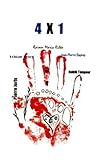
-Jean-Pierre Duprey, from 4X1: Works by Tristan Tzara, Rainer Maria Rilke, Jean-Pierre Duprey, and Habib Tengour

Read Full Post »

Kaddish, Part I

Strange now to think of you, gone without corsets & eyes, while I walk on

the sunny pavement of Greenwich Village.

downtown Manhattan, clear winter noon, and I’ve been up all night, talking,

talking, reading the Kaddish aloud, listening to Ray Charles blues

shout blind on the phonograph

the rhythm the rhythm–and your memory in my head three years after–

And read Adonais’ last triumphant stanzas aloud–wept, realizing

how we suffer–

And how Death is that remedy all singers dream of, sing, remember,

prophesy as in the Hebrew Anthem, or the Buddhist Book of An-

swers–and my own imagination of a withered leaf–at dawn–

Dreaming back thru life, Your time–and mine accelerating toward Apoca-

lypse,

the final moment–the flower burning in the Day–and what comes after,

looking back on the mind itself that saw an American city

a flash away, and the great dream of Me or China, or you and a phantom

Russia, or a crumpled bed that never existed–

like a poem in the dark–escaped back to Oblivion–

No more to say, and nothing to weep for but the Beings in the Dream,

trapped in its disappearance,

sighing, screaming with it, buying and selling pieces of phantom, worship-

ping each other,

worshipping the God included in it all–longing or inevitability?–while it

lasts, a Vision–anything more?

It leaps about me, as I go out and walk the street, look back over my shoulder,

Seventh Avenue, the battlements of window office buildings shoul-

dering each other high, under a cloud, tall as the sky an instant–and

the sky above–an old blue place.

or down the Avenue to the south, to–as I walk toward the Lower East Side

–where you walked 50 years ago, little girl–from Russia, eating the

first poisonous tomatoes of America frightened on the dock

then struggling in the crowds of Orchard Street toward what?–toward

Newark–

toward candy store, first home-made sodas of the century, hand-churned ice

cream in backroom on musty brownfloor boards–

Toward education marriage nervous breakdown, operation, teaching school,

and learning to be mad, in a dream–what is this life?

Toward the Key in the window–and the great Key lays its head of light

on top of Manhattan, and over the floor, and lays down on the

sidewalk–in a single vast beam, moving, as I walk down First toward

the Yiddish Theater–and the place of poverty

you knew, and I know, but without caring now–Strange to have moved

thru Paterson, and the West, and Europe and here again,

with the cries of Spaniards now in the doorstops doors and dark boys on

the street, firs escapes old as you

–Tho you’re not old now, that’s left here with me–

Myself, anyhow, maybe as old as the universe–and I guess that dies with

us–enough to cancel all that comes–What came is gone forever

every time–

That’s good! That leaves it open for no regret–no fear radiators, lacklove,

torture even toothache in the end–

Though while it comes it is a lion that eats the soul–and the lamb, the soul,

in us, alas, offering itself in sacrifice to change’s fierce hunger–hair

and teeth–and the roar of bonepain, skull bare, break rib, rot-skin,

braintricked Implacability.

Ai! ai! we do worse! We are in a fix! And you’re out, Death let you out,

Death had the Mercy, you’re done with your century, done with

God, done with the path thru it–Done with yourself at last–Pure

–Back to the Babe dark before your Father, before us all–before the

world–

There, rest. No more suffering for you. I know where you’ve gone, it’s good.

No more flowers in the summer fields of New York, no joy now, no more

fear of Louis,

and no more of his sweetness and glasses, his high school decades, debts,

loves, frightened telephone calls, conception beds, relatives, hands–

No more of sister Elanor,–she gone before you–we kept it secret you

killed her–or she killed herself to bear with you–an arthritic heart

–But Death’s killed you both–No matter–

Nor your memory of your mother, 1915 tears in silent movies weeks and

weeks–forgetting, agrieve watching Marie Dressler address human-

ity, Chaplin dance in youth,

or Boris Godunov, Chaliapin’s at the Met, halling his voice of a weeping Czar

–by standing room with Elanor & Max–watching also the Capital

ists take seats in Orchestra, white furs, diamonds,

with the YPSL’s hitch-hiking thru Pennsylvania, in black baggy gym skirts

pants, photograph of 4 girls holding each other round the waste, and

laughing eye, too coy, virginal solitude of 1920

all girls grown old, or dead now, and that long hair in the grave–lucky to

have husbands later–

You made it–I came too–Eugene my brother before (still grieving now and

will gream on to his last stiff hand, as he goes thru his cancer–or kill

–later perhaps–soon he will think–)

And it’s the last moment I remember, which I see them all, thru myself, now

–tho not you

I didn’t foresee what you felt–what more hideous gape of bad mouth came

first–to you–and were you prepared?

To go where? In that Dark–that–in that God? a radiance? A Lord in the

Void? Like an eye in the black cloud in a dream? Adonoi at last, with

you?

Beyond my remembrance! Incapable to guess! Not merely the yellow skull

in the grave, or a box of worm dust, and a stained ribbon–Deaths-

head with Halo? can you believe it?

Is it only the sun that shines once for the mind, only the flash of existence,

than none ever was?

Nothing beyond what we have–what you had–that so pitiful–yet Tri-

umph,

to have been here, and changed, like a tree, broken, or flower–fed to the

ground–but made, with its petals, colored, thinking Great Universe,

shaken, cut in the head, leaf stript, hid in an egg crate hospital, cloth

wrapped, sore–freaked in the moon brain, Naughtless.

No flower like that flower, which knew itself in the garden, and fought the

knife–lost

Cut down by an idiot Snowman’s icy–even in the Spring–strange ghost

thought some–Death–Sharp icicle in his hand–crowned with old

roses–a dog for his eyes–cock of a sweatshop–heart of electric

irons.

All the accumulations of life, that wear us out–clocks, bodies, consciousness,

shoes, breasts–begotten sons–your Communism–‘Paranoia’ into

hospitals.

You once kicked Elanor in the leg, she died of heart failure later. You of

stroke. Asleep? within a year, the two of you, sisters in death. Is

Elanor happy?

Max grieves alive in an office on Lower Broadway, lone large mustache over

midnight Accountings, not sure. His life passes–as he sees–and

what does he doubt now? Still dream of making money, or that might

have made money, hired nurse, had children, found even your Im-

mortality, Naomi?

I’ll see him soon. Now I’ve got to cut through to talk to you as I didn’t

when you had a mouth.

Forever. And we’re bound for that, Forever like Emily Dickinson’s horses

–headed to the End.

They know the way–These Steeds–run faster than we think–it’s our own

life they cross–and take with them.

Magnificent, mourned no more, marred of heart, mind behind, mar-

ried dreamed, mortal changed–Ass and face done with murder.

In the world, given, flower maddened, made no Utopia, shut under

pine, almed in Earth, blamed in Lone, Jehovah, accept.

Nameless, One Faced, Forever beyond me, beginningless, endless,

Father in death. Tho I am not there for this Prophecy, I am unmarried, I’m

hymnless, I’m Heavenless, headless in blisshood I would still adore

Thee, Heaven, after Death, only One blessed in Nothingness, not

light or darkness, Dayless Eternity–

Take this, this Psalm, from me, burst from my hand in a day, some

of my Time, now given to Nothing–to praise Thee–But Death

This is the end, the redemption from Wilderness, way for the Won-

derer, House sought for All, black handkerchief washed clean by weeping

–page beyond Psalm–Last change of mine and Naomi–to God’s perfect

Darkness–Death, stay thy phantoms!

II

Over and over–refrain–of the Hospitals–still haven’t written your

history–leave it abstract–a few images

run thru the mind–like the saxophone chorus of houses and years–

remembrance of electrical shocks.

By long nites as a child in Paterson apartment, watching over your

nervousness–you were fat–your next move–

By that afternoon I stayed home from school to take care of you–

once and for all–when I vowed forever that once man disagreed with my

opinion of the cosmos, I was lost–

By my later burden–vow to illuminate mankind–this is release of

particulars–(mad as you)–(sanity a trick of agreement)–

But you stared out the window on the Broadway Church corner, and

spied a mystical assassin from Newark,

So phoned the Doctor–‘OK go way for a rest’–so I put on my coat

and walked you downstreet–On the way a grammarschool boy screamed,

unaccountably–‘Where you goin Lady to Death’? I shuddered–

and you covered your nose with motheaten fur collar, gas mask

against poison sneaked into downtown atmosphere, sprayed by Grandma–

And was the driver of the cheesebox Public Service bus a member of

the gang? You shuddered at his face, I could hardly get you on–to New

York, very Times Square, to grab another Greyhound–

-Allen Ginsberg

Read Full Post »

Come Up From the Fields Father

Come up from the fields father, here’s a letter from our Pete,

And come to the front door mother, here’s a letter from thy

dear son.

Lo, ’tis autumn,

Lo, where the trees, deeper green, yellower and redder,

Cool and sweeten Ohio’s villages with leaves fluttering in the

moderate wind,

Where apples ripe in the orchards hang and grapes on the

trellis’d vines,

(Smell you the smell of the grapes on the vines?

Smell you the buckwheat where the bees were lately

buzzing?)

Above all, lo, the sky so calm, so transparent after the rain,

and with wondrous clouds,

Below too, all calm, all vital and beautiful, and the farm

prospers well.

Down in the fields all prospers well,

But now from the fields come father, come at the daughter’s

call,

And come to the entry mother, to the front door come right

away.

Fast as she can she hurries, something ominous, her steps

trembling,

She does not tarry to smooth her hair nor adjust her cap.

Open the envelope quickly,

O this is not our son’s writing, yet his name is sign’d,

O a strange hand writes for our dear son, 0 stricken

mother’s soul!

All swims before her eyes, flashes with black, she catches the

main words only,

Sentences broken, gunshot wound in the breast, cavalry

skirmish, taken to hospital,

At present low, but will soon be better.

Ah now the single figure to me,

Amid all teeming and wealthy Ohio with all its cities and

farms,

Sickly white in the face and dull in the head, very faint,

By the jamb of a door leans.

Grieve not so, dear mother, (the just-grown daughter speaks

through her sobs,

The little sisters huddle around speechless and dismay’d,)

See, dearest mother, the letter says Pete will soon be better.

Alas poor boy, he will never be better, (nor may-be needs to

be better, that brave and simple soul,)

While they stand at home at the door he is dead already,

The only son is dead.

But the mother needs to be better,

She with thin form presently drest in black,

By day her meals untouch’d, then at night fitfully sleeping,

often waking,

In the midnight waking, weeping, longing with one deep

longing,

O that she might withdraw unnoticed, silent from life escape

and withdraw,

To follow, to seek, to be with her dear dead son.

-Walt Whitman

Read Full Post »

What is this? I find my body passing through the luxuries of another’s order. The stale or crisp ins and out of small things kept in windexed glass boxes, resembling the miniature angles and tracks of the past, leaping out only through my own revving up of their engines. I watch them glitter and swirl in their old world, otherworldly elegance. It is the elegance of the unsaid, the trained hand that knew in its fingertips what braille the artisans of memory use. It sets up its signposts and waits for the rush of modern life to wipe its white and sunlit dust all over the floors of these parlors. It sets up death and waits for life to reanimate it.

I am tracking my way through modern day Philadelphia and I pick up a pencil. I study it, its fine orange finish, its countered edges. I do not write with pencils: what an arcane notion. But I put it in my satchel anyway. It is made of wood and feels like something real.

Across the narrower streets that encase old Jewish families and old Christian families, the brownstone and brick hovers on a street brought by November into its full elegance. I walk with my body, this body that houses me, that doesn’t currently have a home, even an apartment, of my own. I, who studied the most elusive and aristocratic of ideas from a state school, I with a taste for a lifestyle of contemplation and experience that I cannot afford and don’t wish to be able to afford. I who stray into this liminal space between the trappings of culture and grace that only merchants and the children of aristocracy can provide. I, who long to be a writer, who long to be on these bookshelves, bound in fine leather and read before a fire: I am neither schooled appropriately, nor am I connected appropriately.

I neither have the manners to join the collectors of art in their drawing rooms, nor do I have the easy defiance to make art that would shatter their glass boxes. I am the seed that only half-grew. Germinated and then sprouted only its tip. Yet I wander through the facades of the imposing past, the past that was built on money, that paid for its beauty with the grunts of other’s labor. And I want to know why I cannot reconcile myself to it. And then I see a new thing: a museum called The Rosenbach on Delancy Street. And I step in, timidly, like I’m entering someone’s home who is still upstairs or outside. And I’m greeted immediately by a man who may have been a butler in one of these homes in his past life. He is gracious. He is courteous.

There were two brothers, both with money, one who collected art and prints and furniture (mild interest) the other who collected rare books (Yipes! sign me up). Most notable, James Joyce’s Ulysses manuscript was on display there. I pay him eight dollars and the next thing I know I have joined a small tour.

I suffer silently through the docent’s mumbled droning about the dining room silver and the wine cooler with the lock to keep servants out. I wait patiently while he points to portraits on the wall and explains the important people who had once lived here or been connected to those who lived here. I try to imagine why I feel so put off by these things, by the things that are not of my class.

For me, there is a world of difference between gaping at an important manuscript because it changed modern literature and gaping at a silver cup because it was bequeathed by the queen of England. Some would say that they represent the same connectivity to giant structures in history. I say that a silver cup bequeathed by the Queen of England to a bunch of rich Philadelphia merchants as a congratulations for their being so rich and splendid is only interesting if you like to think of yourself being that rich and splendid. And most people do. That’s why places like that downstairs of the Rosenbach house exist.

But give me the Rosenbach upstairs any day. Dr. Rosenbach was the brother with the rumpled collar, literary loves, and a portrait of himself in the reading room that made me want to sit in his lap. He had collected manuscripts and first editions that are rare, rare, rare: Pilgrim’s Progress, Milton’s copy of Thucidities, letters from Lincoln… He even had copies of the first printing of the Gutenberg Bible pass through his hands at some point. Yes, the first printing of any book ever. But even this guy wasn’t rich enough to hold onto that thing for long.

But, feh, who needs all this specific information. You could get that on their website.

N’allez pas trop vite! As our dear Proust would say.

The rooms are dark and spare, with rich woods and one with an old prayer carpet worn by time. We aren’t allowed to stand on it, and all the books are behind lock and key. It feels distinctly how I imagine it would feel were I a bourgeois bohemian in the early part of the century who the Rosenbach’s were somehow obliged to show their library. I feel, in other words, like my presence is intruding on something that certainly doesn’t belong to me and will only be tolerated for a little while more.

I want to open one of those cases, sit on the old divan and just remember a memory that maybe isn’t mine: sitting in an English-style library before a roaring fire, reading a first edition of Dickens’ Nicholas Nickelby, or studying the tiny, slanted handwriting of certain pages from the manuscript of Ulysses. Places like this are the inner sanctum of the true English major’s heart, and even though we are so rarely allowed to touch anything, these places are what make up happy, make us believe, again, in the idea of society, of priviledge, of art and of letters. We are anachronistics, we Anglophile, literary bibliophiles, pining away from an English countryside manor we’ve never stepped foot in.

And when I say “English majors” I truly mean that. This doesn’t, of course, mean that all English majors idealize the reading life, or that only people who went to college and studied literature can. What it does mean is that I give special place to those who made the sacrifice to their career of studying and dedicating themselves to literature during college, many of whom suffer for it afterward. There is hope, though, as you can read about on my Teach page.

In my team of docent-lead peers, a comment would be made here or there with poorly performed humility, filling in notable little trivia about Marianne Moore at the Marianne Moore room (yes, there was a whole room just lifted from her New York apartment and transported here) or holding court quietly about the Joyce.

It’s been five years since grad school for me, but I’ll never forget those moments of the most muted but present desperation to know, to show you know, to BE whatever it it we thought was contained in these revolving worlds of the literary past. Here I am, still on the inside and outside of the crowd: listening to the docent, listening for the grad students’ posturing, seeing the sincerity licked with this human need to possess the past through saying what we know in hushed tones just loud enough for six people to hear.

I am sensitive to these dynamics because I contain them all in myself. And when the young woman tells the other that she teaches British lit. and creative writing at Penn, where she is a grad student, and the other woman is duly impressed, I am convulsed by this involuntary jealousy, remembering the days when I taught English and wanted nothing more than to one day be secured at a great university teaching interesting classes.

But in my vigilant self-awareness, I am able to step beyond it and laugh at myself, at how easy it is to forget that the trappings of a life are rarely the heart of it and that teaching English felt very little like sitting in a drawing room and reading. And that the thing that has given me the most edge and scope in my work has not been trifling through literary trivia at parties with frenemies, but in sitting alone in my apartment, listening to my heart, to the walls, traveling back through the architecture of my life and resolving, where I can, the fractures in who I am.

I was a state school girl from a middle-class neighborhood in Rochester, New York. We ate tuna helper and for the first 18 years of my life, the closest I got to art was through Cats or Phantom of the Opera. But I read the greatest books in history until five in the morning every summer night. And to me, that’s worth more than the Queen’s cup, or even the scrawled manuscript of Ulysses behind glass. After all, Ulysses is hard enough to read, even as a paperback.

I travel with the inner sanctum of books in my heart. I am not rich enough, nor may I ever be, to have my own collection of first editions signed by great writers to their secret lovers and hidden behind glass. But if I am to speak of my day, to speak in a way that earns the grace of my own day, I must not be afraid of the guises and privileges of the rich, imagining the world of important happenings will somehow always be some world beyond me.

If I am ever to become a great artist, it will not be by enchanting myself with the symbols of the past that cloak themselves in charming ideal, but in facing the winter wind that sets on my face as I leave this museum and wind my way back through by the video shops, graffiti, and brownstones.

Read Full Post »

Of Hands and Moons

From nothing that cheats and twists
To nothing of me that falls asleep
Of me that falls asleep, the tidying of pain
Folded in the shadow of my fear;
is it here that I dream of the dead?

A hand in the sunset from which I fall asleep
From which I fall asleep,
will take the time of a full journey of terrors
That will pay the price of a tissue of heat
Thrown at the feet of the thieves
To wrap myself in what I dream of the dead.

-Jean-Pierre Duprey, from 4×1. Buy 4×1 today.

Read Full Post »

Mirabeau Bridge

Under Mirabeau Bridge the river slips away

And lovers

Must I be reminded

Joy came always after pain

The night is a clock chiming

The days go by not I

We’re face to face and hand in hand

While under the bridges

Of embrace expire

Eternal tired tidal eyes

The night is a clock chiming

The days go by not I

Love elapses like the river

Love goes by

Poor life is indolent

And expectation always violent

The night is a clock chiming

The days go by not I

The days and equally the weeks elapse

The past remains the past

Love remains lost

Under Mirabeau Bridge the river slips away

The night is a clock chiming

The days go by not I

-by Guillaume Apollinaire (Translated by Donald Revell)

Read Full Post »

The Aloneness in which I have anchored myself for the last twenty years must not become an exception, a “vacation” which, adducing many justifications, I would have to beg from a supervising happiness. I must live in it without any boundaries. It has to remain this ground of consciousness, to which I can always return, without intending a quick gain here and now, without expecting that it should prove fertile for me; but involuntarily, unstressed, innocent: as to the place I belong to.

4X1: Works by Tristan Tzara, Rainer Maria Rilke, Jean-Pierre Duprey, and Habib Tengour

Read Full Post »

Artist, do not believe that your test lies in the work. You are not what you pretend to be, and what this or that one, not knowing any better, may take you for, until the work has become your very nature to such an extent that you cannot do otherwise than prove yourself in it. Working thus, you are the masterly thrown spear: laws from Her throwing hand receive you, and together you hit the target: what could be more certain than your flight?

Your test, however, is that you are not always thrown. That the spear-player Loneliness does not choose you for the longest time, that She forgets you. This is the time of temptation, when you feel unused, incapable. (As if being reading as not work enough!) Then, when you do not lie there very heavily, diversions exercise you and try to see to what other uses you can be put. As a blind man’s staff, as one of the rods in a grating, or as the balancing pole of a tight-rope walker. Or else they are capable of planting you in the soil of fate, for the miracle of the seasons to happen to you and for you perhaps to sprout small green leaves of happiness….

-Rainer Maria Rilke, from 4X1: Works by Tristan Tzara, Rainer Maria Rilke, Jean-Pierre Duprey, and Habib Tengour

Read Full Post »

All these refusals, do not forget it, my love, have to do with your power. If I were free, if my heart were not bound like a star into the relationships of the irrefutable spirit, then every word, from which rebellion in formed here, denial, complaint – would be Your fame, crossing over to You, agreement, the rush toward you – fall and resurrection in You.

If I were a man of graspable compass, a merchant, a teacher of comprehensible things, an artisan….

-Rainer Maria Rilke, from 4X1: Works by Tristan Tzara, Rainer Maria Rilke, Jean-Pierre Duprey, and Habib Tengour

Read Full Post »

« Newer Posts - Older Posts »